

Most companies are trying to solve burnout at the wrong level.
They offer a wellness webinar.
They remind employees to take breaks.
They add a meditation app.
They tell people to manage their stress better.
None of those things are bad.
But if the actual workplace system keeps draining people, the problem is not a lack of self-care. The problem is performance design.
As a performance science expert, leadership coach, and corporate wellness speaker, I see this all the time. Capable humans are not failing because they are lazy, weak, unmotivated, or unwilling to work hard.
They are often working inside environments that make follow-through harder than it needs to be.
And when that happens, burnout becomes predictable.
Burnout Is Not Just a Personal Problem
Burnout is usually treated like something that lives inside the employee.
They need more resilience.
They need better boundaries.
They need to sleep more.
They need to manage their time.
They need to stop being so overwhelmed.
Again, some of that may be true.
But here is the part too many organizations miss:
A human can have strong resilience skills and still burn out in a poorly designed work environment.
If expectations are unclear, meetings are constant, priorities change every day, communication is reactive, and employees are rewarded for always being available, burnout is not a mystery.
It is the outcome of the system.
This matters for every employee, but it matters even more when we talk about ADHD, neurodiversity, leadership, motivation, and workplace well-being.
Performance Design Means Looking at the System, Not Just the Person
Performance design is the way work is structured so humans can actually do the work well.
It includes:
- How priorities are set
- How decisions are made
- How meetings are used
- How to motivate others and self
- How communication happens
- How employees know what matters most
- How leaders support follow-through
- How energy, focus, motivation, and recovery are protected
When performance design is strong, people do not have to waste so much energy figuring out what to do, what matters, what is expected, or how to get started.
When performance design is weak, even high-performing employees start to look inconsistent.
They miss deadlines.
They avoid hard tasks.
They lose motivation.
They disengage.
They procrastinate.
They become reactive.
They feel constantly behind.
That is not always a character issue.
Sometimes it is a design issue.
The ADHD Workplace Lesson Every Leader Needs to Understand
ADHD at work gives us one of the clearest examples of why performance design matters.
Many employees with ADHD are highly creative, strategic, intuitive, energetic, and capable of deep focus when the conditions are right.
But they may struggle with:
- Task initiation
- Working memory
- Prioritization
- Time blindness
- Emotional regulation
- Switching between tasks
- Follow-through on boring or unclear work
Here is the leadership lesson:
The tools that help ADHD brains often help everyone.
Clear priorities help everyone.
Shorter meetings help everyone.
Written next steps help everyone.
Flexible work blocks help everyone.
Reduced friction helps everyone.
Better communication helps everyone.
This is why neurodiversity in the workplace is not just an inclusion topic. It is a performance topic.
When leaders design work for the humans who actually work there, more people can perform well without burning themselves out.
Motivation Problems Are Often Clarity Problems
Many organizations think they have a motivation problem.
Employees are not engaged.
Teams are dragging.
People are not taking initiative.
Leaders are frustrated that follow-through is inconsistent.
But motivation is not just about wanting something badly enough.
Motivation is affected by clarity, autonomy, energy, confidence, connection, and perceived progress.
If a person does not know what matters most, they will hesitate.
If they do not understand why the work matters, they will disengage.
If they do not feel ownership, they will comply instead of commit.
If they feel constantly behind, they will avoid the work.
If every task feels urgent, nothing feels meaningful.
This is where performance science becomes practical.
Humans are more motivated when work is designed in a way that supports autonomy, competence, and relatedness.
In plain English:
People need some choice.
They need to feel capable.
They need to feel connected to the work, the team, or the outcome.
If those needs are missing, motivation drops.
Not because people are broken.
Because the conditions are working against them.
Wellness Without Work Design Becomes a Band-Aid
Corporate wellness programs can be powerful. I have seen movement, mindset, stress management, and behavior change tools improve focus, energy, and well-being across organizations.
But wellness cannot carry the full weight of a broken work system.
A lunch-and-learn will not fix chronic overload.
A meditation app will not fix unclear priorities.
A movement break will not fix a culture of constant urgency.
A resilience workshop will not fix leaders who do not know how to communicate expectations.
The strongest workplace well-being strategies do both.
They support the individual human and improve the environment that human is working inside.
That is the difference between wellness as a perk and wellness as a performance strategy.
What Poor Performance Design Looks Like
Here are a few signs your organization may not have a burnout problem as much as a performance design problem:
- Everything is urgent
When everything is treated like a priority, employees lose the ability to focus on what matters most. - Meetings are used instead of decisions
Meetings multiply when ownership, authority, and next steps are unclear. - Employees are praised for over-functioning
If the people who answer emails at midnight are seen as the most committed, burnout becomes part of the culture. - Communication lives in too many places
When information is scattered across email, chat, meetings, documents, and side conversations, people waste cognitive energy trying to keep up. - Leaders assume silence means clarity
Just because no one asks questions does not mean people understand the goal. - High performers become the safety net
The most capable employees often absorb the gaps in the system until they are exhausted. - Neurodivergent employees have to mask constantly
If employees with ADHD or other neurodivergent traits have to spend most of their energy appearing “normal,” less energy is available for actual performance.
What Better Performance Design Looks Like
Better performance design does not mean lowering standards.
It means making the path to high performance clearer, healthier, and more sustainable.
That can look like:
- Clear weekly priorities
- Fewer meetings with stronger agendas
- Written decisions and next steps
- More flexible focus time
- Better manager check-ins
- Practical tools for task initiation and follow-through
- Leadership training on motivation and communication
- Workplace well-being programs that address energy, stress, movement, and recovery
- Neurodiversity-informed systems that support different brains without lowering expectations
The goal is not to make work easy.
The goal is to make hard work doable.
The Future of Work Needs More Human-Centered Performance
A lot of companies are talking about AI, productivity, engagement, retention, and doing more with less.
But here is the truth:
You cannot automate your way out of a human performance problem.
If your people are overwhelmed, unclear, disconnected, and exhausted, more tools will not automatically solve the problem. In many cases, more tools create more noise.
The companies that will win are not the ones that simply demand more output.
They will be the ones that understand how humans actually perform.
They will design work around focus, motivation, communication, recovery, and trust.
They will stop treating burnout as an individual weakness and start seeing it as useful data.
Because burnout tells you something.
It tells you where the system is overloaded.
It tells you where expectations are unclear.
It tells you where leaders need better tools.
It tells you where performance is being forced instead of designed.
How the Peak Performance Profile™ Helps Leaders Find the Real Friction
Most teams do not need another generic wellness solution. They need a clearer picture of where performance is actually breaking down.
That is why I use the Peak Performance Profile™ with leaders and organizations that want to better understand motivation, energy, communication, follow-through, stress, and sustainable performance.
The assessment helps identify where people are losing capacity, where work is creating unnecessary friction, and where small design changes could improve both well-being and performance.
For some organizations, that leads to a keynote or workshop. For others, it becomes leadership coaching, ADHD in the workplace training, corporate wellness programming, or a deeper performance strategy project.
The goal is not to label people as the problem.
The goal is to understand the conditions that help capable humans perform better.
Final Thought
If your team is burned out, disengaged, distracted, or struggling to follow through, the answer is not always another wellness perk.
Start with better questions.
Where is work creating unnecessary friction?
Where are employees wasting energy?
Where are leaders unclear?
Where are humans being asked to perform in ways that ignore how motivation, attention, and stress actually work?
That is where real workplace well-being begins.
Not with telling people to try harder.
With designing work so capable humans can do hard things without losing themselves in the process.
Want to Bring This Work to Your Organization?
Dr. Saara Haapanen is a Denver-based performance science expert, leadership coach, ADHD workplace speaker, and corporate wellness strategist. She helps organizations improve motivation, workplace well-being, neurodiversity support, communication, and sustainable performance.
Through keynote speaking, leadership training, ADHD in the workplace workshops, corporate wellness programming, coaching, and the Peak Performance Profile™, Dr. Saara helps teams identify where performance is breaking down and design healthier systems for follow-through, focus, and energy.
Book a Performance Partnership Preview to explore what your team needs most.
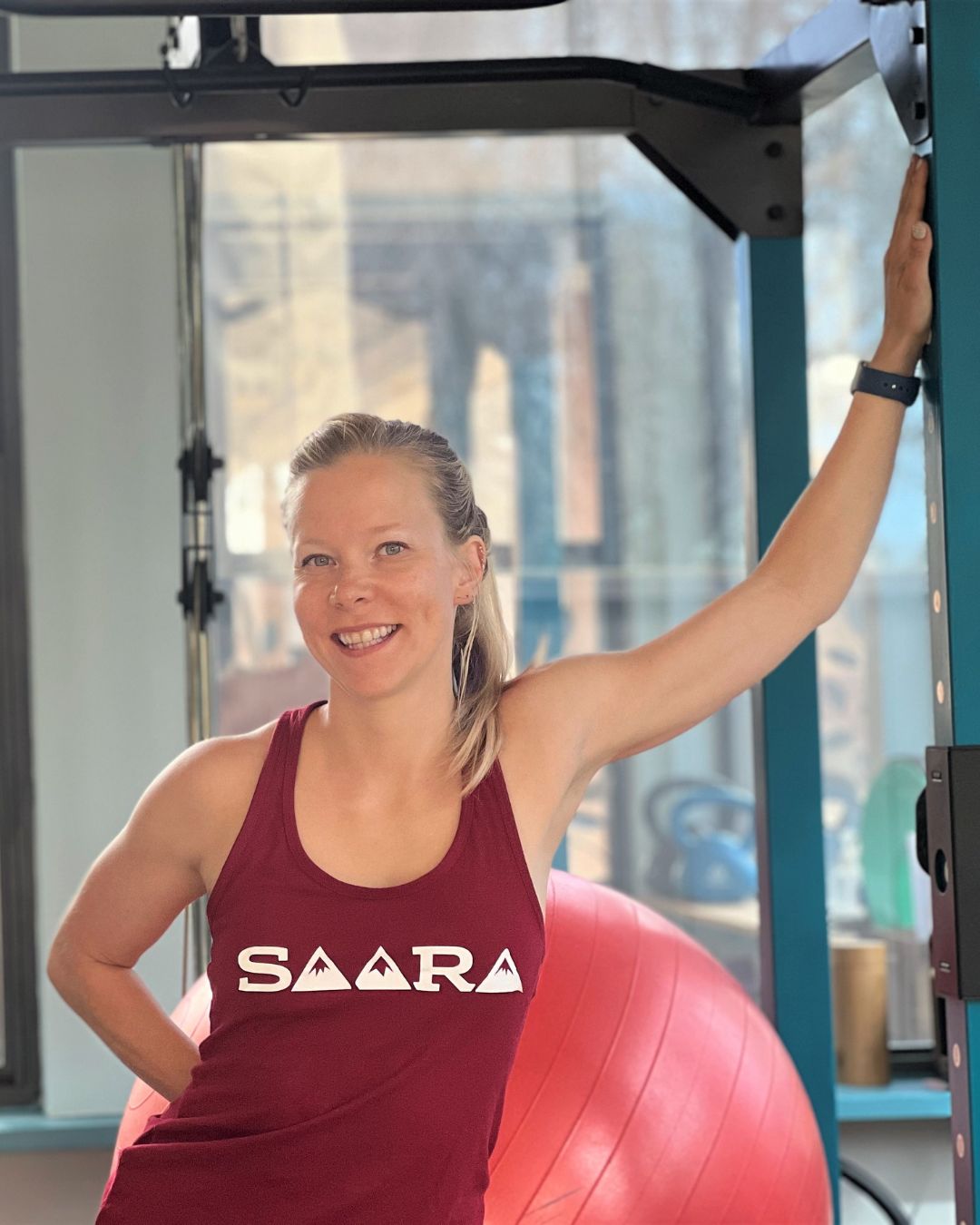
Dr. Saara Haapanen
CEO | Speaker | ADHD Advocate | BSc, MSc, PhD
Dr. Saara Haapanen helps organizations and individuals improve focus, energy, and performance without burnout. With over two decades of coaching experience and a background in human movement, health, and performance science, she designs practical systems that support real people, including neurodivergent and ADHD brains, in today’s workplace.
Photo Credit
Canva by David Stanciu’s Images